Reciprocity in Residence: Hosting Terms for Malagasy Partners Visiting the United States
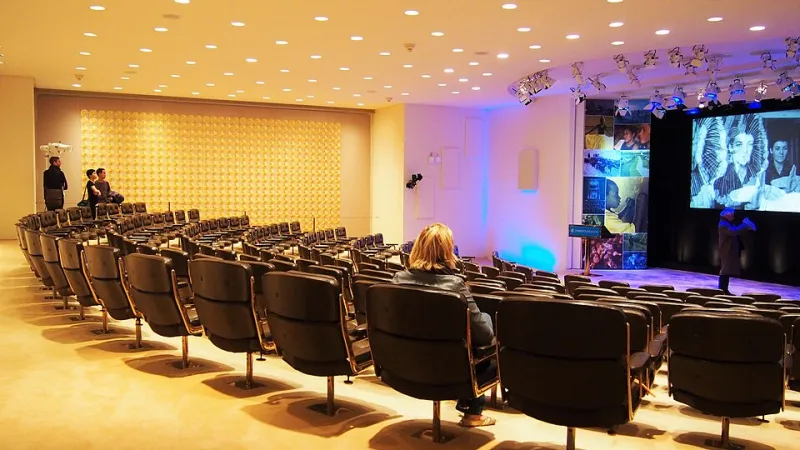
Photo: KangZeLiu, CC BY-SA 4.0, via Wikimedia Commons
When a U.S. organization invites a Malagasy community partner to travel, the itinerary often arrives before the terms do. Flights are held, meetings are booked, and a speaking slot is reserved while the harder questions remain unwritten: Who pays for the return segment if plans change? Is the daily allowance a per diem or a receipt-by-receipt reimbursement? What happens if the visitor becomes ill in a city where the host has no clinic relationship? The invitation may be generous, but generosity is not a substitute for agreed language.
The invitation is a partnership instrument
A hosting arrangement should begin with a short statement of purpose. Is the visit for joint planning, donor education, peer learning, or public testimony? Each purpose carries different obligations. A planning visit may require private working sessions and translation support. A public appearance may require an honorarium, preparation time, and a clear understanding of who owns the resulting recordings. Writing the purpose into an annex prevents the visitor from becoming a flexible prop for the host's calendar.
The terms should also name who decides. If the Malagasy partner's board must approve travel, the U.S. host should not issue a unilateral invitation. If the visitor will be accompanied by a colleague or family member, the budget should state whether the host covers that person or whether the partner does. These details are not administrative noise; they determine whether the visit reflects reciprocal respect or one-sided convenience.
Per diems, receipts, and the accountable plan
U.S. hosts often default to receipt-based reimbursement because it feels familiar. For a visitor unfamiliar with U.S. sales tax, tipping norms, and card acceptance, however, receipt collection can become a second job. A better default is a published per diem for meals and incidentals, paired with direct payment or reimbursement for lodging and approved transport. The U.S. General Services Administration publishes locality rates that can serve as a defensible benchmark, though the host should state which rate applies and whether it is prorated for travel days.
Per diems should be paid in advance when possible. A visitor should not have to finance the host's program from personal funds. If the host uses an accountable plan, the written terms should explain what the per diem covers, what requires a receipt, and how unused advances are reconciled. The reconciliation should be simple and should not penalize the visitor for currency conversion losses. For honoraria and other payments, the host should consult its tax advisors about Form W-8BEN and any withholding obligations; the partnership terms should disclose those obligations before the visit, not after.
The return segment and the risk of the one-way plan
A return ticket is not a travel detail. It is a risk allocation. If the host books a nonrefundable itinerary before the visa is issued, the partner may bear the cost of a canceled program. If the host books only the outbound segment and expects the visitor to arrange the return, the partnership may quietly shift currency and scheduling risk to the Malagasy organization. The terms should state who purchases each segment, who holds the ticket, and what happens if dates change.
Visa fees, passport renewal, transit costs, and domestic travel to the departure airport should also be assigned. The host should avoid promising visa outcomes. Instead, the agreement can commit to providing invitation letters, confirming program dates, and reimbursing documented visa costs whether or not the visa is granted. That distinction protects the partner from being blamed for a consular decision outside their control.
Health coverage, insurance, and the unglamorous clauses
U.S. health insurance is difficult for visitors to navigate. The host should specify whether it is providing travel medical insurance, whether the policy includes emergency evacuation and repatriation, and what the visitor must pay upfront. A policy that exists only on paper is not coverage. The visitor should receive a plain-language summary, an emergency contact, and confirmation that the policy does not exclude pre-existing conditions relevant to the traveler.
Travel insurance should also address trip interruption and baggage delay. These are not luxuries when a visitor is traveling across multiple climate zones with presentation materials and medication. The terms should say who files the claim and who advances the deductible if a claim is delayed.
Honoraria for public appearances
When a Malagasy partner speaks at a U.S. event, the host is not merely offering a platform. It is requesting labor: preparation, translation, travel time, and public representation. An honorarium should be stated separately from travel reimbursement and should not be framed as a gift. The amount, payment timing, and tax treatment should be agreed in advance. If the host plans to record, publish, or use the remarks in fundraising, the consent terms should be separate and specific.
Accessibility and scheduling buffers
Accessibility is not only a wheelchair ramp. It includes dietary needs, religious observance, winter clothing, reliable local transport, a working phone plan, and quiet time after long flights. The host should ask rather than assume. A scheduling buffer of two hours after arrival and one unscheduled day during a week-long visit is not indulgence; it is a condition for effective participation.
A short checklist for the written terms
The hosting annex should answer these questions before tickets are purchased: What is the purpose and duration? Who pays for each travel segment? What per diem applies, and when is it advanced? What insurance is provided, and who pays deductibles? Is there an honorarium, and how is it taxed? Who arranges accessibility and interpretation? What is the cancellation and change policy? Who signs off on schedule changes?
None of these clauses replaces trust. They make trust auditable. A Malagasy partner who is hosted with clear terms can focus on the work rather than on defending against the visit's hidden costs. That is what reciprocity in residence should mean.