The Mobile Wallet Is Still a Treasury: Payment Terms for Malagasy Grantees Without Bank Accounts
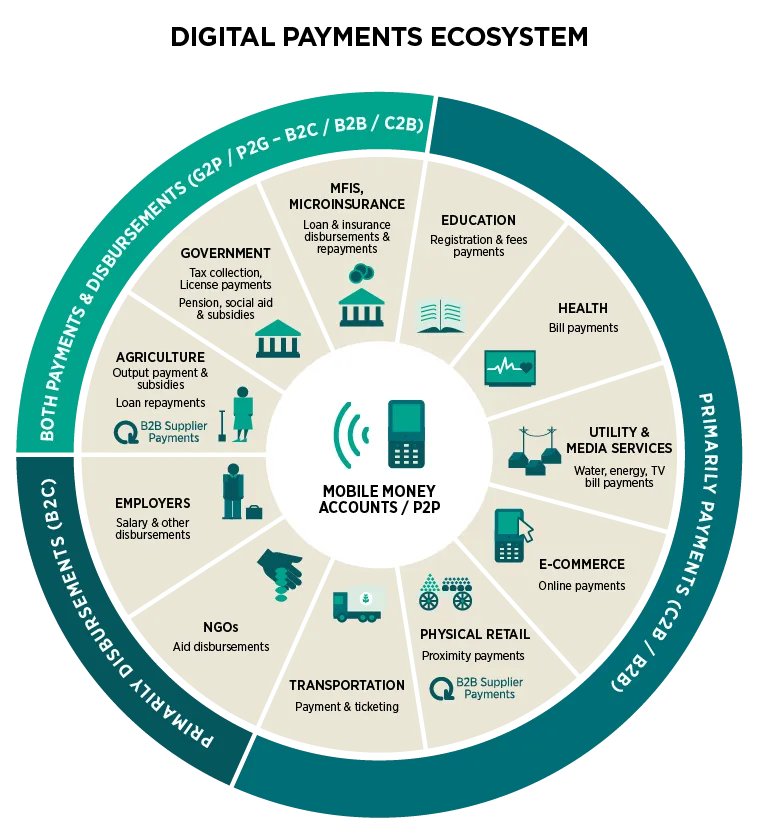
Photo: Le gracié, CC BY-SA 4.0, via Wikimedia Commons
U.S. grant agreements often assume a bank account: a routing number, a wire confirmation, a monthly statement. In Madagascar, that assumption can exclude capable community organizations whose financial life runs through mobile money, local agents, and provider-issued transaction records. The question is not whether such groups are banked in the American sense. The question is whether the grant agreement recognizes the payment rail they actually use and builds controls around it.
Start with the rail, not the institution
Mobile money is not a informal workaround to be tolerated until a grantee opens a commercial account. For many Malagasy associations, it is the practical treasury: funds arrive by phone, are recorded by transaction ID, and are withdrawn through an agent when cash is needed for program costs. Formal banking may be distant, document-heavy, expensive to maintain, or poorly suited to small installments. A payment clause that ignores this reality tends to produce two bad outcomes: delayed disbursement while the partner scrambles to satisfy an unsuitable requirement, or off-agreement workarounds that weaken the audit trail.
The better approach is to name the channel in the agreement. Specify the mobile-money provider, the registered wallet name, the phone number tied to the wallet, and the organization's authorized users. If the wallet is held by an individual rather than the association, say so explicitly and attach safeguards. The goal is not to pretend that mobile money is a bank. The goal is to make the chosen rail legible to both sides.
Assign transaction costs on purpose
Mobile-money fees can appear at several points: transfer fees, cash-out fees, agent commissions, and costs associated with repeated small withdrawals. If the grant budget is silent, those costs can quietly reduce the program amount or fall on the Malagasy partner. Neither outcome is fair, and both are avoidable.
A workable clause separates the approved installment from the cost of moving it. The grantee should receive the full approved amount, with specified transaction costs borne by the U.S. partner or built transparently into the budget. The clause should also cap any funder commitment and require advance agreement for unusual withdrawals. This protects the funder from open-ended fee exposure while protecting the partner from invisible deductions.
Sample clause: Fee allocation. Each installment shall be calculated so that the Grantee receives the full approved amount. Funders shall bear mobile-money transfer fees and one cash-out fee per installment, up to the cap stated in the approved budget. Any additional withdrawal, agent, or expedited-transfer fees shall be agreed in writing before they are incurred. No fee shall be deducted from the program amount without the Grantee's prior written consent.
Treat confirmation as the receipt date
Payment timing should be tied to confirmed receipt, not to the funder's instruction to send. Mobile networks experience outages, agent float can run short, and a transfer can be initiated in the United States before it is available in Madagascar. The agreement should define receipt by provider-issued confirmation: a transaction ID, an SMS message, or a wallet statement entry copied to the grant file. Program timelines and reporting deadlines should run from that confirmed date.
This is not a concession to inefficiency. It is a recognition that a payment is not complete when the funder clicks send. It is complete when the grantee can use the funds. A clear confirmation rule prevents disputes about late payment and gives both sides a shared evidentiary standard.
Build an audit trail that mobile money can actually produce
Audit clauses sometimes demand bank statements because that is what U.S. finance offices know. For a mobile-money grantee, the equivalent records are provider statements, transaction messages, agent receipts, and a simple payment ledger. The agreement should list the records the partner will keep, the retention period, and the funder's right to request copies for verification. It should not require documents the partner cannot obtain.
Where possible, ask for the provider's own statement rather than a reconstructed narrative. If the organization maintains a ledger, keep it short and consistent: date, amount, sender, transaction ID, purpose, and cash-out reference. A one-page ledger is more useful than a perfect template that no one completes.
Keep control with the organization
Mobile-money wallets can be registered to an association, a cooperative, or an individual leader. The governance question is who controls the wallet and who can authorize withdrawals. The agreement should identify at least two authorized users where the organization's size allows, require internal approval for large withdrawals, and state that the wallet is held for the organization's purposes. If a temporary individual wallet is necessary, the agreement should include a written authorization from the organization's governing body, a transition plan, and a review date.
This is also where U.S. partners should resist the urge to make bank account opening a condition of the grant. A requirement that a community organization open and maintain a commercial account may look like a control, but it can also divert time, impose minimum balances, and push the partner toward an arrangement that does not fit its operations. The better control is a documented, organization-owned mobile wallet with clear authorization and records.
Sample clause: Temporary individual wallet. Where the Grantee's governing body has authorized use of an individual mobile-money wallet on a temporary basis, the Grantee shall provide a written resolution identifying the wallet holder, the permitted transaction limits, and the date by which the wallet will be replaced by an organization-held account. The Funders may suspend disbursement if the resolution is not renewed or if control of the wallet changes without written notice.
A short verification checklist
Verification should confirm ownership and control without turning the partner into a suspect. Ask for documents the organization already has, and let the partner choose the channel that fits its operations.
- Confirm the legal name of the grantee against its registration or governing document.
- Confirm the mobile-money account name and phone number in writing, with a provider statement or welcome message if available.
- Obtain a governing-body resolution naming authorized wallet users and approval limits.
- Record the organization's chosen payment channel and the reason for any temporary individual wallet.
- Send a small test payment and confirm the transaction ID before the first full installment.
- Agree on the records the partner will retain and the person who will produce them.
- Review wallet control at least annually or whenever an authorized user changes.
- Do not require a commercial bank account where mobile money is the organization's lawful and accountable treasury.
Payment terms are partnership terms
A payment clause tells a partner what the funder values. If it values U.S. banking conventions more than the partner's operating reality, the grant will start with friction. If it values accountability through the rail the partner actually uses, it can reduce delays, protect program funds, and leave the organization stronger. Mobile money is not outside the financial system. In many Malagasy communities, it is the financial system that works. The agreement should say so.