The Story Belongs to Its Tellers: Narrative Consent Terms for U.S. Funders Working in Madagascar
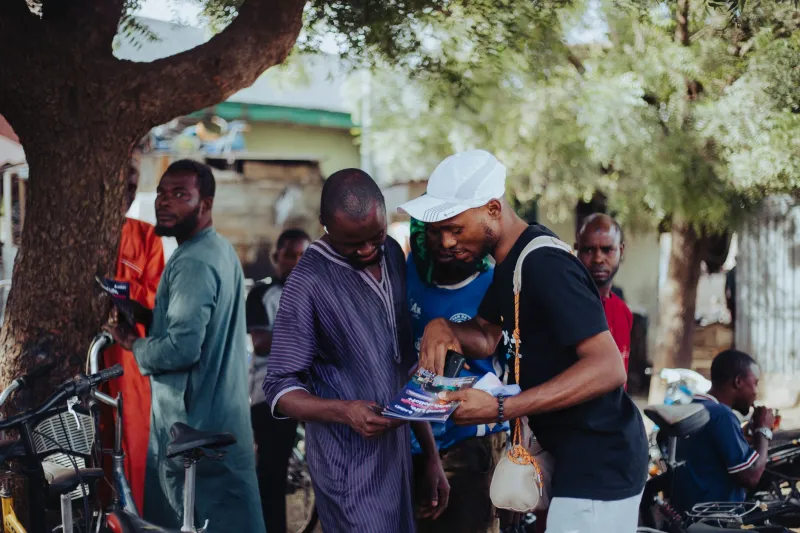
U.S. fundraising teams know how to move a donor with a photograph, a short video, or a first-person story. The emotional power of those materials is real, and so is the responsibility that comes with them. In Madagascar-focused partnerships, a standard photo release may satisfy a legal checklist, but it rarely captures the terms that matter to the community being featured. Consent is not a photo release. It is a governance agreement about who controls a narrative, how it may be used, and what happens when circumstances change.
This distinction is easy to overlook when a U.S. organization is preparing a year-end appeal or a board presentation. Communications staff need images. Program staff have relationships. Legal staff have templates. The result can be a release form signed in one language, stored in another, and applied to channels that did not exist when the consent was given. A more deliberate approach treats narrative consent as part of the partnership terms, not as a last-minute production task.
From release to relationship
A photo release typically grants broad permission to use an image, sometimes in perpetuity and across all media. That may be appropriate for a stock photograph. It is thin for a story about a community's livelihood, a cooperative's governance, or a family's participation in a program. Narrative consent should describe the specific materials, the specific purposes, the review process, and the limits on reuse.
The consenting party also matters. In some cases, an individual can consent on their own behalf. In others, a community representative, local partner, or guardian may need to be involved. The agreement should identify who has authority to speak for the community and how disagreement within the community is handled. This is not a reason to avoid storytelling. It is a reason to design the process before the camera is unpacked.
Community review and approval
Community review is often misunderstood as censorship. It is better understood as accuracy and ownership. A review step allows the people featured to correct factual errors, remove identifying details, and add context that a U.S. communications team might miss. It also reduces the risk of a campaign that looks polished in New York or Washington but reads as extractive in Madagascar.
A practical clause can set a review window of 10 business days for core campaign materials, with a shorter window for time-sensitive social posts. The clause should specify who reviews, how comments are recorded, and what happens if no response is received. Silence should not automatically mean approval unless the partner has agreed to that rule in advance.
Licensing images, audio, and text
A license is not an assignment. U.S. funders should seek permission to use materials for defined purposes, not ownership of the underlying story. The clause should list permitted uses, such as fundraising appeals, annual reports, educational materials, and grant proposals. It should exclude merchandise, commercial advertising, and sublicensing to third parties unless separately agreed.
The term and territory should also be stated. A five-year license for U.S. fundraising use is different from a perpetual worldwide license. If the funder wants to archive materials for historical purposes, that should be described separately. Credits, compensation, and benefit-sharing should be discussed openly, especially when a story becomes central to a campaign.
Social media reuse
Social media is where consent language is most often stretched. A photograph approved for a direct mail appeal may be reposted on Instagram, used in a paid ad, shared with an influencer, or downloaded by a third party. Each of those uses is a new context. The consent terms should say whether social media use is permitted, on which accounts, and for how long.
A strong clause will also address derivatives. Cropping, captioning, editing, and remixing can change meaning. The funder should agree not to create derivative works that alter the story's context without renewed consent. If the organization wants to maintain a social media library, it should set rules for access and review.
Data sovereignty and storage
Narrative materials are data. They may include names, locations, health information, income details, or family relationships. U.S. funders should specify where files are stored, who can access them, and how long they are retained. Uploading identifiable material to a global platform without consent can create risks that the community did not agree to.
Data sovereignty means the community and its local partner have a meaningful say over how their information is held and used. The agreement should include data minimization, secure storage, access controls, and deletion procedures. It should also recognize that U.S. and Malagasy legal requirements may differ. The funder should not assume that a U.S. consent form resolves local privacy expectations.
Revocation and changing circumstances
Consent can be withdrawn. A person may change their mind, a community may object to a campaign, or a political situation may make an old image unsafe. The agreement should describe how revocation works, what the funder will do, and how quickly it will act. A 30-day removal window for active digital channels is a reasonable starting point, with a commitment not to use the material in new campaigns.
Revocation is not always absolute. Printed materials cannot be recalled from every shelf, and archived records may need to be retained for audit. The clause should distinguish between stopping new uses and retrieving every copy. It should also address minors and vulnerable people, who may need guardian consent and ongoing assent.
A checklist for drafting consent language
- Identify the consenting party and the basis of their authority to speak for the community.
- Describe the specific images, audio, video, and text covered by the agreement.
- List permitted purposes, media, territory, and duration.
- Set a community review and approval process with clear timelines.
- Use a license rather than an assignment of rights.
- Limit social media use, paid promotion, and third-party sharing.
- Address storage, access, retention, and data sovereignty.
- Include a revocation and takedown process.
- Provide credit, compensation, or benefit-sharing where appropriate.
- Translate consent materials into the relevant local language and confirm understanding.
- Keep records of approvals and renew consent when purposes change.
- Train U.S. communications and program staff on the terms.
Consent language will not make storytelling risk-free. It can make the relationship more honest. For U.S. funders working in Madagascar, the question is not whether a story will be told. It is who gets to shape it, who benefits from it, and who can say no. Those questions belong in the partnership terms, not in a release form discovered after the campaign has already launched.